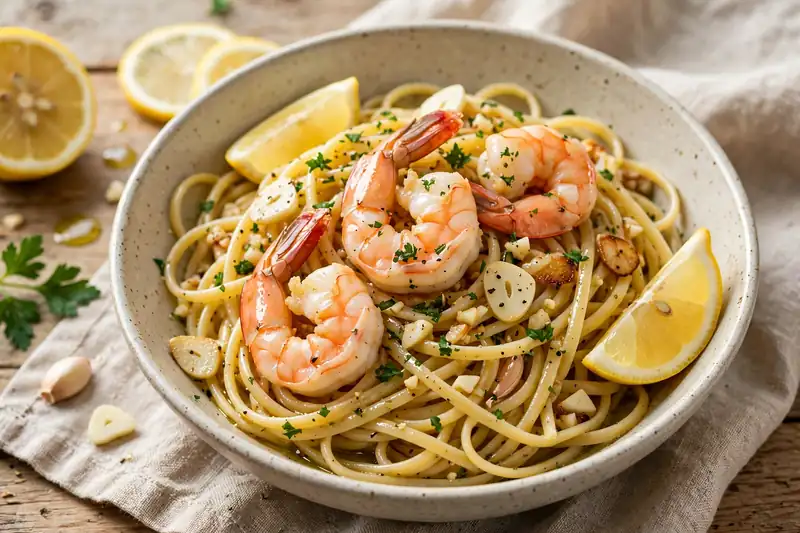
Garlic butter shrimp pasta is the kind of dinner that feels like a treat but comes together in about half an hour, which is exactly why it belongs in a busy cook’s regular rotation. The shrimp cook in just a few minutes, the sauce is built in the same pan from butter, garlic, and a splash of pasta water, and the whole dish lands on the table warm, glossy, and full of flavor. There is no heavy cream and no long simmer, so the pasta stays bright and the shrimp stay tender instead of turning rubbery. It works for a quiet weeknight or for guests, using ingredients you probably already have.
Why This Recipe Works
This recipe works because every step is timed to protect the shrimp and build flavor in the pan. Shrimp cook fast, so they are seared first and set aside before they can overcook, then returned to the sauce only at the very end to warm through. The garlic goes into butter over medium heat, where it turns fragrant and golden without burning, which is where the deep, savory base of the sauce comes from. A splash of white wine or chicken broth lifts the browned bits off the pan, and the starchy pasta water helps the butter and liquid come together into a sauce that clings to every strand instead of pooling at the bottom of the bowl. Lemon goes in last so it stays bright, and the finished pasta tastes rich but still light.
Recipe at a Glance
Prep time is 10 minutes and cook time is about 20 minutes, so dinner is ready in 30 minutes. This recipe serves 4 people, with about 1 1/2 cups of pasta per serving. You will need a large pot for the pasta and a large skillet for the shrimp and sauce. The shrimp are peeled and deveined before cooking, and the pasta water is saved before draining, because it is the secret to a silky sauce.
Ingredients
- 12 ounces linguine or spaghetti
- 1 pound large shrimp, peeled and deveined, tails removed
- 1 teaspoon kosher salt, plus more for the pasta water
- 1/2 teaspoon black pepper
- 1/2 teaspoon paprika
- 2 tablespoons olive oil
- 4 tablespoons unsalted butter, divided
- 6 cloves garlic, thinly sliced, about 2 tablespoons
- 1/2 teaspoon red pepper flakes, or less to taste
- 1/2 cup dry white wine or low-sodium chicken broth
- 1 cup reserved pasta water, plus more if needed
- 1 tablespoon fresh lemon juice, plus 1 teaspoon lemon zest
- 1/4 cup chopped fresh parsley
- 1/4 cup grated Parmesan cheese, plus more for serving
- Lemon wedges, for serving
Instructions
- Bring a large pot of salted water to a boil. Add the pasta and cook according to the package directions until just al dente, about 1 minute less than the time on the box. Before draining, scoop out 1 1/2 cups of the starchy pasta water and set it aside. Drain the pasta and set it aside while you make the sauce.
- Season the shrimp. Pat the shrimp dry with paper towels, which helps them sear instead of steam. Season them on both sides with the salt, black pepper, and paprika. Dry shrimp brown better and pick up more flavor from the pan.
- Sear the shrimp. Heat the olive oil and 1 tablespoon of the butter in a large skillet over medium-high heat until the butter foams. Add the shrimp in a single layer, leaving space between them, and cook for 2 minutes without moving them. Flip each shrimp and cook for 1 to 2 minutes more, until pink and just opaque. Transfer the shrimp to a plate right away so they do not overcook.
- Cook the garlic. Lower the heat to medium and add the remaining 3 tablespoons of butter to the same skillet. When the butter melts, add the sliced garlic and red pepper flakes. Cook for 1 to 2 minutes, stirring often, until the garlic is fragrant and lightly golden. Watch it closely, because garlic can go from golden to burnt in seconds.
- Deglaze the pan. Pour in the white wine or chicken broth and use a wooden spoon to scrape up any browned bits stuck to the bottom of the skillet. Those bits carry a lot of flavor. Let the liquid simmer for 2 minutes so it reduces slightly and the alcohol cooks off.
- Build the sauce. Add 3/4 cup of the reserved pasta water to the skillet and bring it to a gentle simmer. Let it cook for 2 minutes, stirring, until the sauce thickens a little and looks slightly glossy. The starch in the water helps the butter and liquid hold together.
- Add the pasta. Add the drained pasta to the skillet and toss it with tongs so every strand is coated in the sauce. Cook for 1 to 2 minutes, adding a splash more pasta water a little at a time if the pasta looks dry. The pasta should look shiny and lightly sauced, not swimming in liquid.
- Finish the dish. Take the skillet off the heat and add the lemon juice, lemon zest, parsley, and Parmesan. Toss again until the cheese melts into the sauce. Return the shrimp to the skillet and toss gently just until they are warmed through, about 30 seconds. Taste and add more salt, pepper, or lemon juice if needed.
- Serve. Divide the pasta among warm bowls, making sure each serving gets a fair share of shrimp. Sprinkle with extra Parmesan and parsley, and serve with lemon wedges on the side.
Tips for the Best Results
Buy shrimp that are already peeled and deveined to save time, and check the size on the bag: large shrimp, about 21 to 25 per pound, hold up best in this dish and are easy to flip. Frozen shrimp work well too, but thaw them fully in the refrigerator overnight or in a bowl of cold water for 20 minutes, then pat them very dry before seasoning. Do not crowd the skillet, or the shrimp will steam instead of browning; cook in two batches if needed. Slice the garlic evenly, and pull the pan off the heat if it colors too fast. Save extra pasta water to loosen the sauce, and taste before serving to adjust salt and lemon.
Variations
This recipe adapts easily to what you have on hand. For a richer sauce, stir in 1/3 cup of heavy cream with the pasta water and let it simmer for 2 minutes before adding the pasta. For a veggie version, add a big handful of baby spinach, halved cherry tomatoes, or steamed broccoli florets when you toss in the pasta, and let them warm through for 1 minute. If you like heat, increase the red pepper flakes to 1 teaspoon or add a pinch of cayenne with the paprika. Swap the linguine for fettuccine, angel hair, or penne; just watch the cooking time, since thin pasta cooks fast. For a dairy-free version, use olive oil instead of butter, skip the Parmesan, and finish with extra lemon and parsley. You can also trade the shrimp for scallops, cooked 2 to 3 minutes per side, or sliced chicken breast, cooked 5 to 6 minutes per side.
Serving Suggestions
Garlic butter shrimp pasta is a complete meal on its own, but a few simple sides make it feel like a full dinner. A green salad with a light lemon vinaigrette adds freshness and balances the richness of the butter. Warm garlic bread or a crusty baguette is perfect for soaking up any sauce left in the bowl. Steamed asparagus, roasted green beans, or sauteed zucchini all pair well and add color to the plate. If you are feeding guests, set out extra Parmesan, red pepper flakes, and lemon wedges so everyone can season their own bowl.
Storage and Reheating
Store leftovers in an airtight container in the refrigerator for up to 2 days. Shrimp pasta is best the day it is made, because the shrimp can toughen when reheated, so try to eat it fresh when you can. To reheat, warm the pasta gently in a skillet over medium-low heat with a splash of water or chicken broth, tossing often, until just heated through. Avoid the microwave if possible, since high heat makes the shrimp rubbery and the sauce can separate. If you do use the microwave, heat in 30-second intervals at half power and stir between rounds. Do not freeze this dish, because the pasta turns soft and the shrimp lose their texture after thawing.
Frequently Asked Questions
Can I use frozen shrimp for this recipe?
Yes, frozen shrimp work very well. Thaw them in the refrigerator overnight, or place the sealed bag in a bowl of cold water for about 20 minutes, changing the water once. Pat the shrimp completely dry with paper towels before seasoning, because wet shrimp will steam in the pan instead of searing. Avoid shrimp that have already been cooked, since they will turn rubbery when heated again.
How do I keep the shrimp from overcooking?
The key is to cook the shrimp briefly and remove them from the pan as soon as they turn pink and opaque. Shrimp are done when they curl into a loose C shape; a tight O shape means they are overcooked. Searing them first and adding them back only at the end keeps them tender, because they spend just 30 seconds warming through in the finished sauce.
What pasta shape works best?
Long pasta like linguine, spaghetti, or fettuccine is the classic choice, because the thin strands pick up the buttery sauce beautifully. Short shapes like penne, farfalle, or rigatoni also work well and are easier to serve to kids. Cook any shape until just al dente, since the pasta finishes cooking for a minute in the sauce.
Can I make this without wine?
Yes. Replace the white wine with an equal amount of low-sodium chicken broth, vegetable broth, or even water with a squeeze of lemon juice. The broth still deglazes the pan and lifts the flavorful browned bits, and the finished sauce tastes just as good. If you use broth, taste the sauce before adding extra salt.
Why is my sauce watery?
The most common cause is skipping the pasta water or adding too much of it at once. Pasta water contains starch that thickens the sauce and helps it cling, so add it a little at a time and let the sauce simmer for a minute or two. Also make sure the pasta is drained well and finished in the skillet for a minute, which lets the sauce tighten up around the noodles.
Can I add vegetables to this pasta?
Yes, and they make the dish even better. Baby spinach wilts in seconds when tossed in at the end, cherry tomatoes soften nicely if added with the garlic, and asparagus or green beans can be blanched with the pasta during the last 2 minutes of cooking. Add sturdy vegetables early and delicate ones late so nothing turns mushy.
This garlic butter shrimp pasta is proof that a fast dinner does not have to taste rushed. With a hot pan, a handful of garlic, and a splash of pasta water, you get a meal that is buttery, bright, and satisfying every single time. Keep the recipe in your weeknight rotation, and once you have made it a few times, it will become one of those dinners you can cook without even looking at the steps.