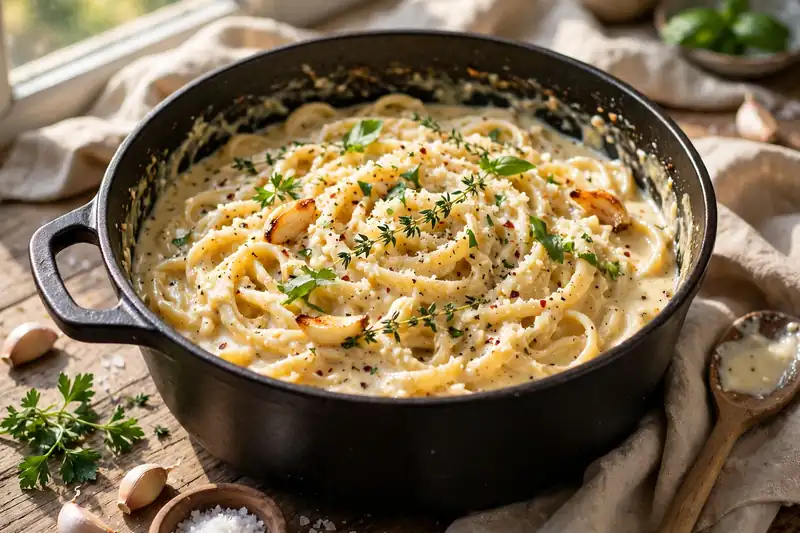
One-pot pasta is the kind of recipe that makes weeknight cooking feel easy again. The pasta cooks right in the sauce, so the starch from the noodles thickens everything into a creamy, silky coating without a second pot or a separate sauce pan. This creamy garlic parmesan one-pot pasta is ready in about 30 minutes, uses ingredients you probably already have, and tastes rich enough for a weekend dinner. It is the recipe to reach for when you want comfort food fast, with almost no cleanup at the end.
Why This Recipe Works
Cooking pasta in the sauce instead of a big pot of water changes everything. As the pasta simmers, it releases starch into the liquid, and that starch turns a simple mix of broth, milk, and cream into a sauce that clings to every noodle. Garlic cooked gently in butter builds a warm, savory base, while Parmesan melts in at the end for salty, nutty flavor. The method also saves time and dishes. You only need one large pot or deep skillet, a cutting board, and a spoon. There is no draining, no colander to wash, and no sauce that needs to be timed separately from the pasta. The result is a creamy pasta that tastes like it took far more effort than it did.
At a Glance
| Prep Time | Cook Time | Total Time | Servings |
|---|---|---|---|
| 10 minutes | 20 minutes | 30 minutes | 4 servings |
Ingredients
- 12 ounces penne, rotini, or fusilli pasta
- 2 tablespoons butter
- 1 tablespoon olive oil
- 5 cloves garlic, minced
- 1 small onion, finely chopped
- 2 cups low-sodium chicken broth or vegetable broth
- 1 1/2 cups whole milk
- 1/2 cup heavy cream
- 1 teaspoon Italian seasoning
- 1/2 teaspoon kosher salt
- 1/4 teaspoon black pepper
- 1/4 teaspoon red pepper flakes, optional
- 3/4 cup grated Parmesan cheese, plus more for serving
- 2 cups fresh spinach, optional
- 2 tablespoons chopped fresh parsley, for serving
Instructions
- Melt the butter with the olive oil in a large pot or deep skillet over medium heat. Add the onion and cook for 3 to 4 minutes, stirring often, until soft and clear.
- Add the garlic and cook for 30 seconds to 1 minute, just until fragrant. Do not let it brown, or it will taste bitter.
- Pour in the chicken broth, milk, and heavy cream. Add the Italian seasoning, salt, black pepper, and red pepper flakes if using. Stir well and bring the mixture to a gentle simmer over medium heat.
- Add the pasta and stir so every piece is covered in liquid. Reduce the heat to medium-low, cover the pot, and cook for 12 to 14 minutes. Stir every 3 to 4 minutes so the pasta does not stick to the bottom, and check that the liquid is simmering gently, not boiling hard.
- When the pasta is tender and most of the liquid has turned into a thick sauce, remove the pot from the heat. The sauce will look a little loose at first, but it thickens as it cools.
- Stir in the Parmesan cheese a handful at a time until it melts into the sauce and the pasta turns smooth and glossy.
- Add the spinach if using, and stir for 1 minute until it wilts into the pasta.
- Taste the pasta and add more salt or pepper if needed. Serve hot in bowls, topped with extra Parmesan and chopped parsley.
Tips for the Best Results
Stirring is the most important step in one-pot pasta. The noodles sit close together in a small amount of liquid, so they can stick to the bottom or clump if they are left alone. Stir every few minutes, and scrape the bottom of the pot as you go. Keep the heat at a gentle simmer. A hard boil will cook off the liquid too fast and leave the pasta dry, while very low heat will stretch the cooking time. Use freshly grated Parmesan if you can. Pre-shredded cheese often has a coating that keeps it from melting smoothly, while fresh Parmesan melts into a silky sauce. If the sauce gets too thick before the pasta is done, add a splash of broth or milk, a few tablespoons at a time. If it is too thin at the end, let it sit for 3 to 5 minutes off the heat and it will thicken on its own.
Variations
This recipe is easy to change to fit what you have. For a heartier dinner, stir in cooked chicken, sliced sausage, or shrimp during the last few minutes of cooking. Leftover rotisserie chicken works especially well, since it only needs to heat through. For a meatless version, add sliced mushrooms with the onion, or stir in a can of drained white beans at the end for extra protein. Sun-dried tomatoes add a sweet, tangy note, and a spoonful of pesto stirred in at the end turns the whole dish green and fresh. To make it lighter, use all milk instead of cream and reduce the Parmesan to 1/2 cup, then add extra spinach or broccoli florets. For a little heat, increase the red pepper flakes to 1/2 teaspoon or add a pinch of cayenne.
Serving Suggestions
Creamy garlic parmesan pasta is rich on its own, so it pairs well with something fresh and simple. A green salad with a light vinaigrette cuts through the cream, and garlic bread is perfect for scooping up the last of the sauce. Roasted broccoli, green beans, or asparagus add color and crunch to the plate. For a fuller meal, serve the pasta alongside grilled chicken or a piece of baked fish, and let the sauce double as the side dish. At the table, set out extra Parmesan, red pepper flakes, and cracked black pepper so everyone can season their own bowl.
Storage and Reheating
Let leftover pasta cool to room temperature, then store it in an airtight container in the refrigerator for up to 3 days. The sauce will thicken as it sits, which is normal. To reheat, warm the pasta in a saucepan over low heat with a splash of milk or broth, stirring gently until it loosens and turns creamy again. The microwave also works in 30-second bursts, with a spoonful of milk stirred in between rounds. Avoid reheating on high heat, which can make the sauce separate. This pasta does not freeze well, because the cream sauce can turn grainy when thawed, so it is best enjoyed fresh or from the refrigerator within a few days.
Frequently Asked Questions
Can I use a different pasta shape?
Yes. Short shapes work best in one-pot pasta because they cook evenly and hold the sauce. Penne, rotini, fusilli, rigatoni, and medium shells are all good choices. Long pasta such as spaghetti or fettuccine also works, but it needs more stirring so it does not clump together. Avoid very small pasta such as orzo or ditalini for this method, since it cooks faster and can turn mushy before the sauce thickens.
Why is my sauce too thin?
The sauce thickens as the pasta releases starch and as it cools slightly off the heat. If it still looks thin when the pasta is tender, let the pot sit uncovered for 3 to 5 minutes and stir in the Parmesan, which helps it thicken. If it is still too loose, simmer it uncovered for 2 to 3 more minutes, stirring often. Next time, use a little less broth or cook the pasta a minute longer.
Can I make this pasta without cream?
Yes. You can use all milk instead of cream, though the sauce will be lighter and a little less rich. Use 2 cups of milk in place of the milk and cream combined, and add an extra 1/4 cup of Parmesan to help the sauce thicken. A spoonful of cream cheese stirred in at the end also adds body without heavy cream.
Can I add vegetables to this recipe?
Yes, vegetables are an easy addition. Add broccoli florets, sliced mushrooms, or peas during the last 5 minutes of cooking so they stay tender but not soft. Spinach and kale wilt in at the very end in about a minute. Frozen peas can go in straight from the freezer in the last 3 minutes. Avoid adding raw vegetables at the very start, since they may overcook while the pasta simmers.
How do I keep the pasta from sticking to the pot?
Stir every 3 to 4 minutes and scrape the bottom of the pot each time. Make sure the liquid is simmering gently and that the pasta is covered when you first add it. A wide, heavy pot helps, because the heat spreads evenly and the pasta has more room. If a few pieces do stick, turn the heat down slightly and add a splash of broth while you stir.
Is this recipe good for meal prep?
It works well for a day or two of meal prep, but it is best the day it is made. Store portions in single-serving containers in the refrigerator for up to 3 days, and reheat gently with a splash of milk. The pasta will absorb some of the sauce as it sits, so it will be thicker when reheated. For the freshest result, cook the pasta fresh and store the sauce separately if you plan to eat it later in the week.
One-pot pasta proves that a creamy, comforting dinner does not need a long ingredient list or a pile of dishes. With garlic, Parmesan, and one good pot, you can have dinner on the table in 30 minutes and spend the rest of the evening relaxing instead of cleaning up. Make it once, and it will quickly become one of those recipes you cook without even looking at the instructions.